CargoWise Integration
CargoWise AI Integration
Deep AI integration with CargoWise One — automated XML data push, document processing, and cargo data intelligence built on your existing CargoWise instance.
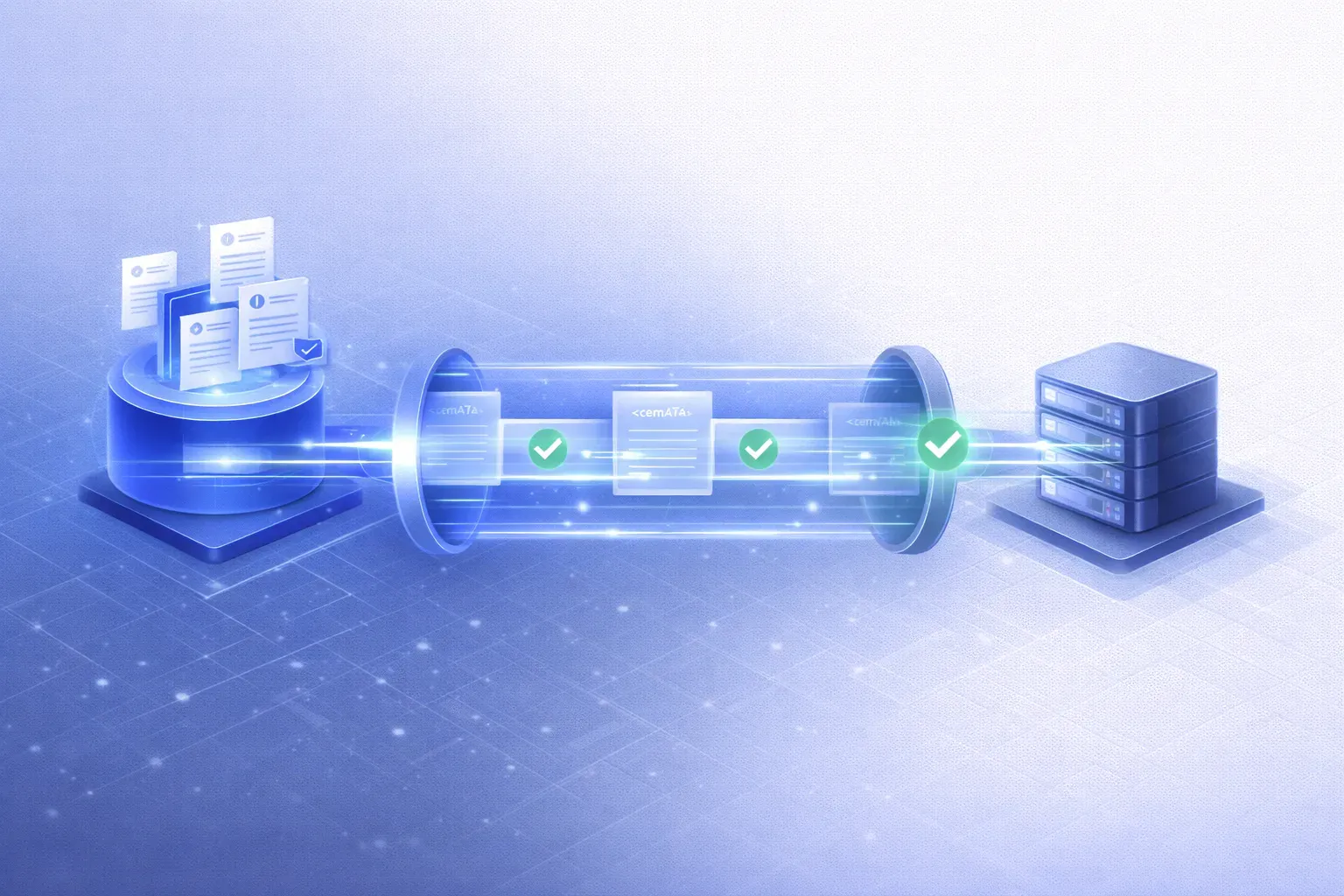
CargoWise One is the dominant TMS in freight forwarding, used by thousands of freight forwarders, customs brokers, and 3PLs worldwide. It is the operational backbone for companies ranging from mid-market forwarders to global enterprises like Hellmann Worldwide Logistics, Kuehne+Nagel, and DB Schenker. FreightMynd builds deep, native AI integration with CargoWise — not a surface-level connector, but a full CargoWise freight automation layer that pushes validated data directly into your CargoWise modules via eHub and Universal Gateway. Our CargoWise document processing pipeline handles invoices, AWBs, packing lists, and compliance documents end to end.
CargoWise AI Integration Architecture
Connection Method
CargoWise eHub and Universal Gateway APIs
Supported Versions
CargoWise One (CW1), all current versions
Data Objects
CargoWise AI Automation Capabilities
Shipment record creation from extracted document data
Extracted fields from invoices, AWBs, and packing lists are mapped to CargoWise shipment record fields and pushed via XML. The system handles the complexity of CW1's XML schema — party data, reference numbers, charge codes, and module-specific field mappings — so your team never manually enters routine document data into CargoWise.
Document attachment and linking to shipment records
Source documents (PDFs, images) are automatically attached to the correct CargoWise shipment record, linked by reference number. Operators can access the original document directly from within CargoWise without searching email or shared drives.
Customs declaration pre-population
Extracted data from commercial invoices, packing lists, and certificates of origin is mapped to CargoWise customs module fields — HS codes, values, quantities, country of origin — pre-populating declarations and reducing customs processing time by 60-70%.
Rate module data synchronization
Carrier rate data extracted from rate sheets, contract PDFs, and carrier portal exports is structured and pushed into CargoWise's rate module, keeping your rate data current without manual rate card maintenance.
Accounting charge code mapping and posting
Invoice line items are mapped to your CargoWise chart of accounts and charge code structure, enabling automated cost posting that matches your existing accounting configuration.
Automated workflow triggers on CargoWise events
CargoWise events (shipment creation, milestone updates, document receipt) can trigger downstream FreightMynd processing — enabling bi-directional automation where CargoWise and the AI layer work in concert.
CargoWise eHub Integration — How It Works
FreightMynd connects to your CargoWise One instance through the eHub Universal Gateway and eAdaptor HTTP+XML interface. Once documents are extracted and validated, the pipeline formats all data as CargoWise-compliant Universal XML — the same schema CargoWise uses internally — and pushes it directly into your TMS via authenticated API calls. This covers shipment creation, consol management, customs declaration modules, and universal activities.
Unlike generic middleware that maps fields to a one-size-fits-all template, FreightMynd's XML schema mapping is built specifically for your CargoWise One instance. We map to your charge codes, your reference number conventions, your module configurations, and your party data structures. The result is data that enters CargoWise exactly as if a senior operator had keyed it — with no post-entry cleanup required.
The eHub connection supports both real-time push (individual documents processed and pushed as they complete validation) and batch push (accumulated records pushed at scheduled intervals). For high-volume operations, we recommend real-time push so CargoWise data stays current throughout the day. For operations with specific cut-off workflows, batch push aligns with your existing processing cadence.
CargoWise XML Data Push
Every piece of validated data that FreightMynd extracts from your freight documents is transformed into CargoWise Universal XML and pushed directly into the appropriate CW1 module. Shipment records are created in the Forwarding module with full party data, reference numbers, and charge breakdowns. Customs data flows into the Customs module with HS codes, values, and declaration fields pre-populated. Accounting entries map to your chart of accounts and charge code structure. Document attachments are linked to the correct shipment record by reference number so operators can access originals without leaving CargoWise.
CargoWise OCR and Document Extraction
FreightMynd's document extraction pipeline combines Azure Document Intelligence OCR, layout analysis, and LLM-based field extraction to process every major freight document type — commercial invoices, air waybills, bills of lading, packing lists, certificates of origin, and customs declarations. The extracted data is validated against your business rules and cross-checked across related documents before any XML is generated. This means CargoWise receives clean, consistent, verified data — not raw OCR output that requires manual correction.
FreightMynd vs Generic CargoWise Connectors
Most CargoWise integration tools use generic, template-based approaches that require manual workarounds for anything outside the standard flow. FreightMynd is purpose-built for your specific CargoWise instance.
| Generic Connectors | FreightMynd | |
|---|---|---|
| Integration method | Template-based | Native eHub + Universal Gateway |
| XML schema handling | Generic mapping | Built for your CW1 instance |
| Edge cases | Manual workarounds | Built in from day one |
| Data ownership | Vendor cloud | Your environment |
Related CargoWise Resources
Explore our CargoWise guides, solutions, and real-world case studies to see how FreightMynd integrates AI directly into your CargoWise workflows.
How to Automate CargoWise Data Entry with AI
Step-by-step guide to eliminating manual data entry in CargoWise using AI document extraction and XML push.
GuideCargoWise AI Integration Guide
Technical guide to connecting AI systems with CargoWise via eHub, eAdaptor, and Universal XML.
Solution4PL Control Tower Automation
Full document intelligence pipeline from email ingestion to CargoWise XML push with zero manual entry.
SolutionDocument Intelligence
AI document processing that reads, classifies, and extracts data from freight documents for CargoWise integration.
Case StudyHellmann Worldwide Logistics
How Hellmann automated their 4PL control tower with AI — 60% processing time reduction and zero manual CargoWise entry.
Live Deployment
We built and deployed this integration for Hellmann Worldwide Logistics — processing 200–300 page document batches with near-zero failure rate and zero manual TMS data entry. Every extracted, validated field goes directly into CargoWise via XML. No human ever touches the TMS for routine document data.
Read the Hellmann case studyHow FreightMynd Connects to CargoWise
Your Documents
FreightMynd AI
Validation
CargoWise
CargoWise AI Integration — FAQ
How does FreightMynd integrate with CargoWise?
Do we need to modify our CargoWise configuration?
Is data pushed in real-time?
Does it work with CargoWise multi-company environments?
Do you use the eHub or Universal Gateway?
What CargoWise modules does the integration cover?
Can it work alongside our existing CargoWise customizations?
Solutions That Work with CargoWise
4PL Control Tower
Full document intelligence pipeline — email monitoring to CargoWise XML with zero manual entry. Built and live for Hellmann Worldwide Logistics.
Document Intelligence
AI-powered extraction and processing of freight documents — invoices, AWBs, packing lists, customs forms — with 99%+ accuracy.
Invoice Processing
AI-powered freight invoice processing and procurement automation — extraction, validation, matching, and approval automation for logistics AP and procurement teams.
Quote Management
AI-powered freight quote generation, comparison, and response automation. Automate every freight quote from spot quotes to contract rates — reduce turnaround from hours to minutes.
Sea Freight
End-to-end shipping AI automation for sea freight operations — freight booking, documentation, tracking, and exception management.
Revenue Recovery
AI-powered freight audit and revenue recovery — automated carrier invoice validation, overcharge detection, contract rate enforcement, and dispute management. Stop the revenue leakage hiding in your freight invoices.
Spend Analytics
AI-powered freight spend analytics — real-time visibility into transportation costs by carrier, lane, mode, and service level. Built from your actual invoice and shipment data, not estimates.
Pricing AI
AI-driven freight rate analysis, pricing optimization, and market intelligence for sea and air freight forwarders.
Air Freight
AI-powered automation for air cargo services — AWB processing, air freight rates comparison, booking, and shipment tracking.
Customs Automation
AI-powered customs automation that extracts data from commercial invoices, packing lists, and certificates of origin — pre-populates customs declarations and pushes structured data into your filing platform.
Document Automation
Automate freight document processing — invoices, AWBs, bills of lading, customs forms. AI extraction with 99%+ accuracy and direct TMS integration.
TMS Automation
Automate your TMS with AI — zero manual data entry, intelligent document routing, and native API integration with CargoWise, SAP TM, Oracle TMS.
Other Integrations
Ready to Connect AI to CargoWise?
Book a free audit. We'll assess your CargoWise setup and show you what's possible.